Your Senses Know Best: Building a Personal Framework for Finding the Paper That's Actually Right for You
There's a moment most makers know well. You're standing in a paper shop — or scrolling through a supplier's website at midnight — and you're supposed to just know which paper is right for your project. The specs are right there: 90 lb, cold press, acid-free. But somehow that information doesn't quite bridge the gap between the product description and your actual creative gut.
Here's the thing: paper selection isn't really a data problem. It's a sensory one. And a loosely connected but genuinely passionate community of paper enthusiasts across the US has started treating it that way — building personal evaluation rituals that look a lot less like reading a spec sheet and a lot more like swirling a glass of Burgundy.
They call themselves, half-jokingly, paper sommeliers. And whether or not you adopt the label, their approach might just change the way you shop forever.
Why Generic Recommendations Keep Letting You Down
Most paper advice is written for a hypothetical average maker. Use hot press for fine detail. Cold press for texture. 140 lb for wet media. These rules aren't wrong, exactly — but they flatten out the enormous variation in how individual artists actually work.
A watercolorist who works wet-on-wet with loose, gestural washes needs something entirely different from someone who builds up detailed botanical illustrations with tiny, controlled brushstrokes — even if both technically practice "watercolor." A calligrapher using a flex nib has different surface needs than one using a brush pen. A printmaker pulling monoprints by hand operates in a completely different tactile universe than someone running editions through a press.
Generic guidance can get you in the neighborhood. But finding your paper — the one that genuinely clicks — requires a more personal kind of inquiry.
The Sensory Stack: What You're Actually Evaluating
Paper sommeliers don't evaluate paper along a single axis. They work through what some in the community call a "sensory stack" — a layered set of observations that, taken together, build a surprisingly complete picture of how a paper will perform and feel in practice.
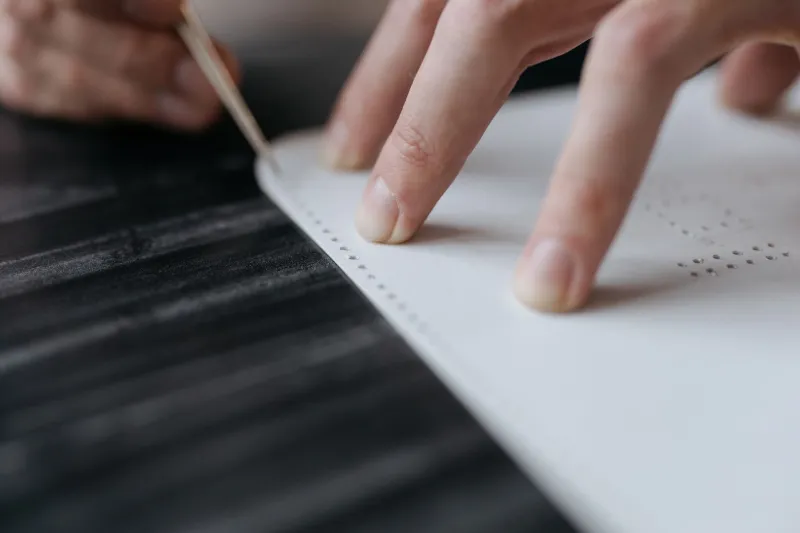
Touch comes first, always. Run a sheet between your thumb and forefinger. Is the surface grainy, almost like fine sandpaper? Silky and almost frictionless? Somewhere in between, with a subtle tooth that catches your fingernail just slightly? Notice whether the texture feels consistent or whether you can detect variation — handmade and mold-made papers often have a beautiful irregularity that machine-made sheets don't. Touch the front and back. Many papers have a distinctly different feel on each side, and knowing which side you prefer can make a real difference.
Then hold it up to light. Natural window light is ideal. A quality paper often has a kind of luminosity when backlit — you can see the fiber structure, the watermark if there is one, and any inconsistencies in thickness. Papers made with cotton rag content tend to glow in a warm, almost organic way. Heavily calendered papers (the smooth, almost shiny ones) tend to block light more completely. Neither is better — but how a paper handles light often signals how it'll interact with wet media and how your finished work will look under gallery or ambient lighting.
Listen when you flex it. This one surprises people, but paper has a voice. Give a sheet a gentle wave or bend it slightly near your ear. A crisp, clean snap suggests a well-sized paper with good internal structure — often a good sign for ink work and fine lines. A softer, more muted sound usually indicates a more absorbent, porous sheet that will drink up moisture readily. Neither is superior; they're just different tools for different jobs.
Finally — and yes, really — smell it. Not in a precious way, just a practical one. Lean in and take a quick sniff. Freshly made papers often carry a clean, slightly mineral or grassy scent from their fiber content. Papers with high cotton content smell different from wood pulp papers. Heavily sized papers sometimes have a faintly chemical note. An off or musty smell on an older sheet can signal age-related degradation that might affect how media adheres or how the paper holds up over time. Your nose is picking up real chemical information here.
Building Your Personal Evaluation Ritual
The goal isn't to become a paper snob. It's to build enough personal reference points that you stop feeling lost when faced with choices. Here's a practical way to start.
Keep a paper journal. It doesn't have to be elaborate. A small notebook where you tape a swatch of each paper you try, jot down a few sensory observations, and note what you actually used it for — and how it went — is genuinely invaluable over time. After six months, patterns emerge. You start to see exactly which characteristics reliably work for you and which ones consistently disappoint.
Do a side-by-side comparison intentionally. Pick three or four papers that are supposedly similar and put them through the same test on the same day. Use the same tool — same brush, same pen, same pastel — on each one. The differences that felt abstract in a spec comparison become visceral and obvious when you're working side by side.
Name what you're noticing. Developing your own personal vocabulary for paper qualities isn't pretentious — it's functional. If you call a surface "grippy" and that means something specific to you, use it. If "thirsty" is how you describe a paper that absorbs ink immediately, write it down. The more precisely you can articulate what you're experiencing, the easier it becomes to seek out (or avoid) those qualities in the future.
Seek out paper sample packs. Many specialty suppliers — including the kind of curated collections you'll find at shops like Papirmasse — offer sample sets specifically so you can do this kind of hands-on evaluation before committing to a full ream. Take full advantage. A sample pack is essentially a sensory flight.
The Payoff Is Real
When you finally land on a paper that genuinely fits your practice, you'll know it immediately. The resistance that was slowing you down disappears. Your tools behave the way you expect them to. The work feels easier — not because you've gotten better overnight, but because you've removed the friction between your intention and the surface you're working on.
That's what the paper sommelier community is really chasing. Not expertise for its own sake, but the deep satisfaction of knowing your materials well enough to make them work for you rather than against you.
Your senses have been collecting data this whole time. It's worth learning how to listen to them.