Before the First Mark: How a Simple Paper Ritual Can Unlock Your Best Creative Work
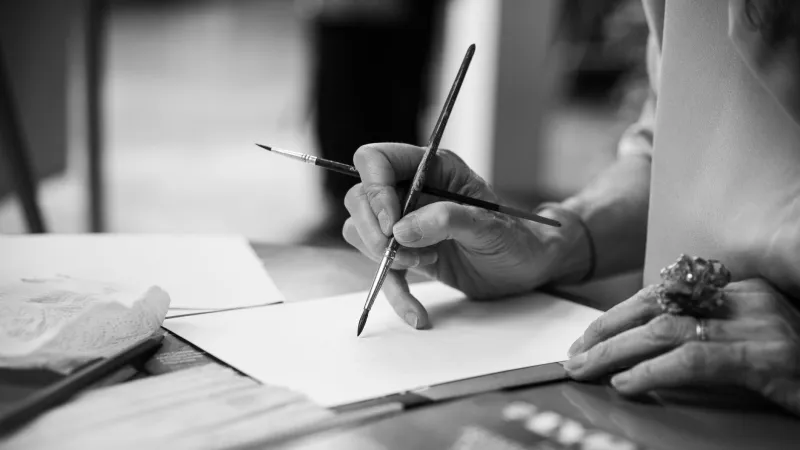
There's a moment most creatives rush through without thinking twice. You've got an idea, you're fired up, and you just want to get going. So you grab the nearest sheet of paper, uncap your pen or squeeze out some paint, and dive in. Forty-five minutes later, you're frustrated — not because the idea was bad, but because something about the surface just isn't cooperating.
Sound familiar?
Here's the thing: that frantic grab-and-go approach might actually be slowing you down. A growing number of artists, illustrators, and makers are discovering that taking five or ten minutes before a project — deliberately handling their materials, testing a few marks, and choosing paper with real intention — doesn't delay their work. It supercharges it.
Think of it less like procrastination and more like a pre-game warm-up. Athletes don't skip stretching because they're eager to play. Neither should you.
What We Mean by a Paper Ritual
A paper ritual doesn't have to be elaborate or precious. You're not lighting candles or journaling about your feelings (though hey, no judgment if that's your thing). At its core, it's a short, intentional practice of engaging with your materials before you commit to them.
That might look like:
- Pulling out two or three candidate sheets and holding them up to the light
- Running your fingertips across the surface to feel the tooth, the smoothness, the weight
- Making a few test marks with whatever tool you plan to use — a brush loaded with watercolor, a dip pen, a pencil at different pressures
- Noticing how the paper responds: does the ink bleed? Does the graphite sit on top or sink in? Does the surface feel right for what you're trying to say?
This process does something quietly powerful. It moves your brain from scattered, ambient thinking into focused, sensory engagement. You're no longer mentally juggling your to-do list or half-watching something on your phone. You're in the work — before the work has even started.
The Science Behind the Slowdown
There's real cognitive logic here, even if it sounds a little woo-woo on the surface. Decision fatigue is a well-documented phenomenon: the more small choices we make throughout the day, the harder it becomes to make good ones. For creatives, this is especially brutal. When you sit down to make something and your brain is still running hot from a dozen earlier decisions, the blank page becomes genuinely overwhelming.
A pre-project ritual acts like a reset button. By engaging your hands and senses in a low-stakes task — feeling paper, making a test mark — you're giving your overloaded prefrontal cortex a break while simultaneously warming up the more intuitive, tactile parts of your creative mind.
Some researchers describe this as entering a state of "attentional narrowing" — basically, your focus tightens around the task in front of you and the noise of everything else fades. Athletes and musicians know this well. It's the same reason a guitarist does a quick scale run before performing, or a chef does mise en place before cooking. The ritual signals to your nervous system: this is what we're doing now.
For paper-based creatives, the act of selecting and handling specialty paper is uniquely well-suited to this kind of sensory priming. Unlike digital tools, paper has texture, weight, smell, and sound. It gives your senses something real to grab onto.
How to Build Your Own Version
The best paper ritual is the one you'll actually do, so keep it simple enough to be sustainable. Here's a basic framework to start from and make your own.
Step one: Choose your candidates. Rather than grabbing whatever's on top of the pile, pull out two or three options that feel appropriate for the project. Watercolor work? Maybe you're deciding between cold press and hot press. Pen and ink? You might be weighing a smooth Bristol against a coated drawing paper. Having a small selection forces a moment of consideration without turning into an hour-long rabbit hole.
Step two: Get hands-on. Hold each sheet. Flex it gently. Feel the surface with your fingertips and the back of your hand — both reveal different things. Notice the weight. Notice whether it feels stiff or supple. Does it feel like it wants to be worked on, or does it feel resistant?
Step three: Make test marks. This is the most important part. Use your actual tools — the same brush, pen, or pencil you plan to use for the real piece — and make a few marks in a corner or on a scrap of each candidate paper. Watch how the media behaves. Does the watercolor bloom the way you want? Does the ink dry crisp or feather slightly? Is the pencil giving you the line quality you're after?
Step four: Commit and set up. Once you've chosen your paper, take a moment to set it up properly. Tape it down if you're working with wet media. Position it at the angle that feels right. This moment of preparation is part of the ritual — it signals that you're ready.
The Unexpected Benefit: More Intentional Work
Creators who've adopted some version of this practice often report something they didn't expect: their finished pieces feel more cohesive. Not just technically better, but emotionally more intentional — like the paper and the work belong together.
That's not magic. It's the natural result of choosing your surface thoughtfully rather than reactively. When you've already considered what the paper can do, you're more likely to work with it rather than against it. You make compositional choices that suit the surface. You use techniques that play to the paper's strengths. The whole thing becomes a conversation rather than a battle.
Illustrators who work with specialty papers — think Japanese kozo sheets, heavyweight cotton rag watercolor paper, or toned drawing papers — will tell you that the material itself starts to suggest ideas once you've spent a little time with it. A rough-textured surface might push you toward a looser, more expressive mark. A silky smooth hot press sheet might invite precision. The paper becomes a collaborator.
Start Small, Stay Consistent
You don't need to overhaul your entire creative process to try this. Start with your next project — whatever it is. Give yourself five minutes before you make your first mark. Handle your paper. Make a few test marks. Take a breath.
Chances are, you'll notice the difference pretty quickly. Not just in the quality of the work, but in how it feels to make it. Less frantic. More focused. Like you actually know what you're doing and why.
And honestly? That confidence — the kind that comes from knowing your materials and trusting your choices — might be the biggest creative advantage of all.