Gather, Make, Repeat: How Paper Lovers Are Quietly Rebuilding DIY Culture from the Ground Up
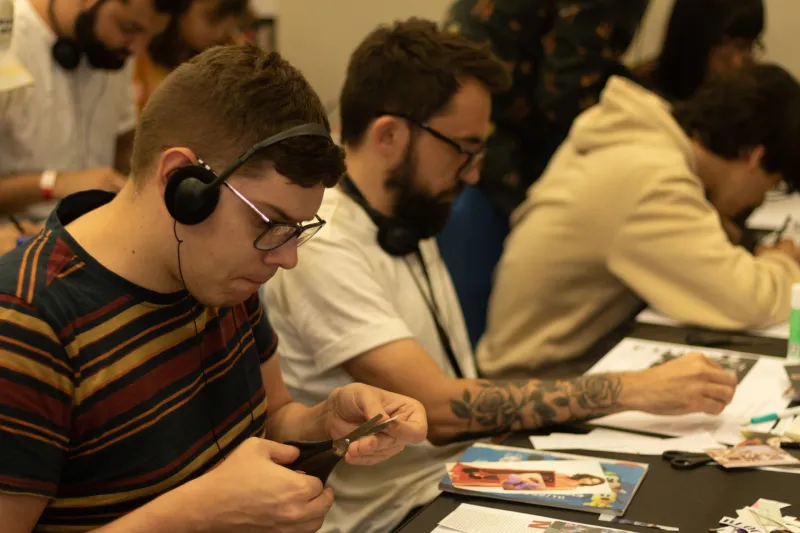
There's a particular kind of excitement that happens when someone discovers their first sheet of Lokta paper, or holds a piece of handmade cotton rag for the first time. It's hard to explain to someone who hasn't felt it. But ask anyone who's been pulled into a specialty paper community, and they'll describe the exact same thing: a before and an after.
Across the US, that moment of discovery is happening more and more — and it's not happening in isolation. It's happening inside communities. Maker groups, online collectives, local craft circles, and yes, the comment sections of niche paper retailers. People are finding each other around a shared love of materials that most of the world has never thought twice about.
And quietly, without much fanfare, they're sparking something that looks a lot like a creative renaissance.
The Numbers Behind the Feeling
It would be easy to write this off as nostalgia — a reaction to screen fatigue or pandemic-era boredom that's already fading. But the data tells a different story.
Etsy reported a sustained surge in handmade paper goods and paper-based craft supplies well into the mid-2020s. Meetup groups centered on bookbinding, paper marbling, and letterpress have seen consistent growth in cities like Portland, Chicago, Austin, and Brooklyn. Subreddits dedicated to paper crafts — r/bookbinding, r/papercrafts, r/journaling — have collectively added hundreds of thousands of members over the past few years.
And specialty paper retailers? Traffic is up. Significantly.
"We've watched our community grow in ways we genuinely didn't anticipate," says one independent paper shop owner based in the Pacific Northwest. "Five years ago, people mostly came to us knowing exactly what they wanted. Now we get customers who are just starting out, and they've already been part of online communities for months before they ever buy their first sheet. They arrive educated, passionate, and ready to experiment."
That shift — from individual consumer to community member — is at the heart of what's driving this moment.
Why Paper, Why Now
It's worth asking: of all the materials someone could obsess over, why paper?
Part of the answer is accessibility. You don't need a studio, a kiln, or a spray booth. Paper crafts scale from a kitchen table to a dedicated workspace. The barrier to entry is low enough that anyone can start, but the depth of the craft — the sheer variety of weights, textures, fiber contents, coatings, and grain directions — means there's always more to learn. That combination of approachability and complexity is rare, and it's exactly what makes communities form around it.
There's also something about the tactile nature of paper that feels like a direct counterpoint to how most of us spend our days. Screens are frictionless by design. Paper has texture, resistance, personality. Working with it demands a kind of physical attention that a lot of people are genuinely hungry for right now.
"I think people are craving proof that they made something," says Renata Osei, who runs a paper arts collective out of Atlanta called Fold & Forward. "When you spend eight hours on a laptop, you have files. Maybe a PDF. With paper, you have an object. Something you can hold. Something that didn't exist before you made it. That matters."
Fold & Forward started as a small monthly meetup and now hosts workshops, an annual paper arts showcase, and an active online group with members in over a dozen states. Renata credits the growth not to any particular marketing push but to what she calls "the introduction effect" — one person brings a friend, that friend brings two more, and the community compounds organically.
Specialty Materials as a Shared Language
What's interesting about paper communities specifically is how much of the connection happens through the materials themselves. Members don't just share finished projects — they share samples, swap sheets, debate the merits of different weights, and go deep on sourcing questions.
"Half of our most active conversations are basically about paper nerd stuff," laughs Marcus Delgado, who moderates a 40,000-member Facebook group called The Paper Collective. "Where to find a specific Japanese tissue paper. Whether a certain hot-press watercolor paper is worth the price jump. How to store handmade sheets without them warping. It sounds boring from the outside, but it's actually how people make real connections. You help someone find the paper they've been looking for for months, and you've made a friend."
That material-first bonding is something specialty retailers have started to recognize as genuinely valuable — not just as a customer service function, but as a cultural role. When a shop becomes the go-to source for hard-to-find papers, it also becomes a kind of gathering point. People come for the Fabriano, and they stay for the community.
Brands that lean into that role — that treat their customers as fellow enthusiasts rather than just buyers — tend to become anchors for these communities in ways that go well beyond transactions.
What These Communities Are Actually Building
Spend enough time in paper-focused maker groups and you start to notice something. The culture is different from a lot of online creative spaces. It's less competitive, more collaborative. People share sources freely. They post failures alongside successes. They celebrate the beginner's first bookbinding attempt with the same energy as a master printmaker's new series.
Renata from Fold & Forward has a theory about why. "Paper has a built-in humility to it. The material doesn't care how good you are. A beautiful sheet of handmade paper is beautiful whether a beginner uses it or an expert. That levels the playing field in a way that I think sets the tone for how people treat each other."
Marcus echoes this. "We have members who've been doing paper arts for thirty years and members who just discovered origami last month. And they genuinely help each other. I don't see that everywhere online."
That generosity of spirit is producing something real: a new generation of makers who are deeply invested in analog craft, who understand materials at a level most casual crafters never reach, and who are actively teaching each other skills that might otherwise disappear.
The Bigger Picture
Zoom out and this isn't just a paper story. It's a story about what happens when people find each other around a shared love of making things by hand — and what that does to the broader culture.
DIY has always had waves. The Arts and Crafts movement of the early 1900s. The crafting boom of the 1970s. The Etsy era of the 2000s. Each wave has left something lasting behind: skills preserved, aesthetics shifted, values reoriented around making over consuming.
This current wave feels different in one key way: it's happening simultaneously online and off. The communities are digital enough to span the whole country, but grounded enough in physical materials that they keep pulling people back to their hands.
Paper is an unlikely catalyst for a cultural shift. But then again, it's been carrying human ideas forward for centuries. Maybe it makes perfect sense that it's the thing bringing makers back together now.
If you've been curious about specialty papers and haven't yet found your people — they're out there. They're probably arguing right now about the correct way to store Mulberry paper. And they'd love to meet you.