Gone But Not Forgotten: Your Survival Guide for Tracking Down Discontinued Papers
You find out the same way most people do — a quiet little note on a product page, or worse, a blank space where the listing used to be. Your go-to watercolor paper, the one that held washes just right and dried without warping, is gone. Discontinued. The word lands like a punch.
It happens more often than most crafters realize, and it stings every single time. But here's the thing: discontinued doesn't always mean gone forever — at least not immediately. With a little detective work and some forward planning, you can often track down remaining inventory, find a worthy stand-in, and make sure you're never completely blindsided again.
Why Papers Get Discontinued in the First Place
Understanding the why actually helps with the hunt, so it's worth spending a minute here. Paper lines get cut for a handful of reasons, and they're rarely about the product being bad.
Raw material sourcing is a big one. Specialty papers often depend on specific fibers — cotton rag, kozo, mulberry bark, or particular wood pulps — and when those supply chains get disrupted or become cost-prohibitive, manufacturers sometimes pull the plug rather than reformulate. Other times, a paper gets discontinued because sales volume simply didn't justify keeping production lines running. Niche products serving small creative communities are especially vulnerable here.
Manufacturer consolidations are another culprit. When larger paper companies acquire smaller mills, entire product lines sometimes get quietly retired to streamline operations. And then there's the environmental compliance angle — some older paper-making processes have faced regulatory pressure, pushing mills to retire formulations they can't easily modernize.
Knowing the reason matters because it tells you how much time you might have. A supply chain issue might mean production resumes eventually. A full manufacturer discontinuation is more permanent.
Start the Hunt Before the Shelves Empty
The moment you hear a paper is being discontinued — or even suspect it — start moving. Here's where to look:
Independent art supply retailers. Big-box stores and major online platforms tend to clear discontinued inventory quickly or return it to distributors. But smaller independent shops, especially ones that cater to printmakers, bookbinders, or fine artists, often hold onto specialty stock longer. Call them. Seriously, just call. A lot of inventory that never makes it onto a website is sitting in a back room somewhere.
Wholesale and distributor liquidation channels. Paper distributors sometimes sell off discontinued stock in bulk. If you're willing to buy a case rather than a pack, you can often score significant quantities at reduced prices. Check with distributors like Talas, Legion Paper, or New York Central Art Supply — they occasionally list overstock or discontinued lines.
eBay and Etsy. Don't overlook the secondhand market. Other artists who stocked up and never used their full supply sometimes sell off extras. Search by the exact paper name and mill. You'd be surprised what turns up.
Manufacturer direct. It sounds obvious, but contact the manufacturer. Some mills will sell remaining stock directly, especially if the discontinuation is recent. Even if they can't sell to you directly, they may be able to point you toward distributors still holding inventory.
Online forums and communities. The papermaking and bookbinding communities in particular are tight-knit and incredibly knowledgeable. Forums on Reddit (r/bookbinding, r/Watercolor), Facebook groups for printmakers, and specialty communities like the Wet Canvas forums are goldmines. Post a question. Someone usually knows where to find it or has extra to sell.
Finding a Substitute That Actually Works
At some point, the remaining inventory runs dry and you have to move on. Finding a substitute isn't about settling — it's about understanding what made your original paper special and reverse-engineering that with something new.
Break down the qualities you loved. Was it the weight? The texture — hot press, cold press, rough? The sizing that controlled how ink or paint absorbed? The fiber content that gave it a particular tooth or translucency? Write those characteristics down like a spec sheet.
Then start testing systematically. Request sample packs from suppliers — many specialty paper retailers (including us here at Papirmasse) offer sample options precisely for this reason. Don't just eyeball it; put the paper through the actual techniques you use. If you're a watercolor artist, lay down washes. If you're a letterpress printer, run a test impression. A paper that looks similar on screen can behave completely differently under your hands.
Some reliable starting points for common substitutions:
- For discontinued Japanese papers: Explore offerings from Awagami Factory, which produces a wide range of kozo and washi papers with detailed fiber and weight specs.
- For discontinued watercolor papers: Fabriano, Arches, and Hahnemühle each have overlapping weights and textures across their lines — there's often more crossover than you'd expect.
- For discontinued printmaking papers: Legion Paper's Stonehenge line has become a go-to substitute for a lot of discontinued etching and relief papers.
Building a Strategic Stash
Once you've been burned by a discontinuation, you start thinking differently about your supplies. Building a strategic reserve isn't hoarding — it's smart creative resource management.
The key is being selective. You don't need to stockpile everything; you need to stockpile the papers that are genuinely irreplaceable in your practice. Ask yourself: if this paper disappeared tomorrow, would it meaningfully change how I work? If the answer is yes, it's worth keeping a deeper supply on hand.
A few practical guidelines for building your reserve:
Buy in larger quantities when a paper is on sale. Most specialty papers store well if kept flat, away from humidity and direct light. A cool, dry environment — even a dedicated drawer or flat file — can keep paper in excellent condition for years.
Set a rotation system. Use from the front of your stock and add new purchases to the back, the same way you'd rotate canned goods. This keeps your supply fresh and ensures nothing sits unused until it degrades.
Stay plugged into industry news. Follow the social accounts of paper mills and distributors. Subscribe to newsletters from specialty retailers. When a discontinuation is coming, there's often a window of advance notice — if you're paying attention.
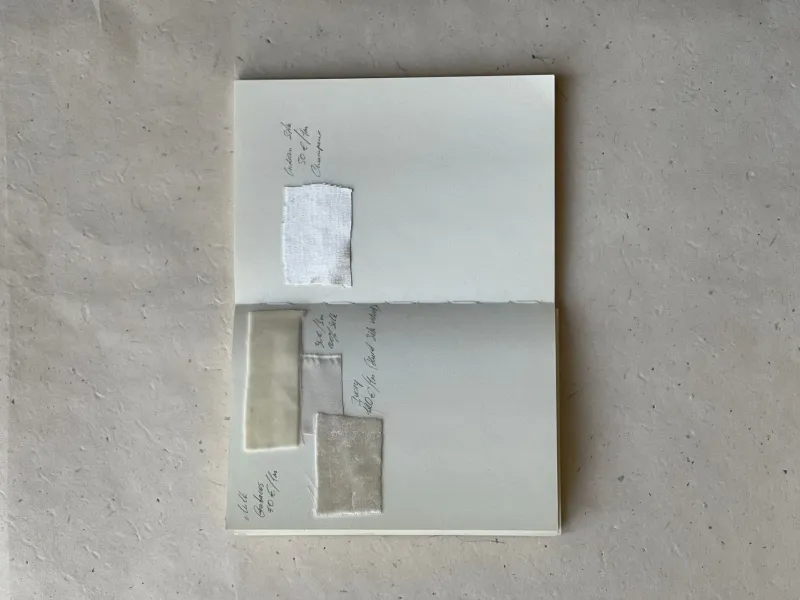
Document your favorites. Keep a running list of papers you love with their exact names, weights, and sources. When you find a new favorite, record it immediately. Memory is unreliable, and paper names are notoriously easy to mix up.
The Bigger Picture
There's something genuinely bittersweet about specialty papers disappearing from the market. Each one represents a specific set of craft decisions — the mill's choices about fiber, sizing, texture, and finish — that took years or decades to develop. When a paper line ends, a little bit of that accumulated knowledge goes with it.
But the paper community is remarkably resourceful. Artists adapt, substitute, and sometimes even inspire mills to bring beloved products back. Staying connected to that community — sharing what you know, asking what others have found — is honestly one of the best tools you have.
The paper trail doesn't have to end just because a product does. It just takes a little more work to follow.